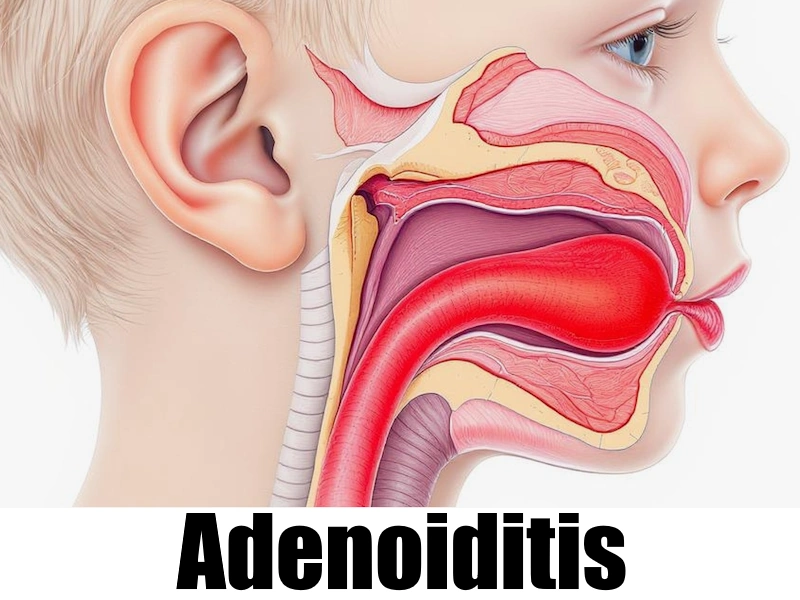
Adenoiditis is when a child’s adenoids become swollen. These are small glands located behind the nose.
At the back of the nasal area. They are part of the immune system. And help fight germs that can make a child sick.
Adenoids help protect the body, but they can sometimes get infected or irritated. When this happens, they swell up. If they become too swollen, they can block the nose and make it hard for a child to breathe normally.
Signs of adenoiditis are very much like those of a cold. Like a sore throat, a runny nose, or trouble breathing through the nose. These symptoms mean the child may need rest to feel better.
Symptoms of Adenoiditis
Here are a few symptoms of adenoiditis:
- Fever
- Mouth breathing
- Nasal congestion
- Nasal obstruction
- Postnasal drip
- Runny nose
- Snoring
- Sore throat
- Trouble feeding (infants)
Common Causes of Adenoiditis
Adenoiditis mostly happens because of infections. Children who often catch colds or throat infections are more likely to get it. Both viruses and bacteria can cause the adenoids to swell.
Allergies can also be a reason. When a child has allergies, the adenoids can stay irritated for a long time.
Things in the environment can make it worse, too. Dirty air, smoke from cigarettes, and poor air inside the home can increase the risk.
Sometimes it can also run in families. which means some children are more likely to have problems with their adenoids.
Adenoiditis in Children vs Adults
Adenoiditis is much more common in children. This is because adenoids are bigger and more active between the ages of three and seven. As children grow older, the adenoids usually get smaller. And it causes fewer problems.
Adenoiditis does not happen often in adults. But it can occur. When it happens. It is mostly because of long-term infections or allergies.
Or persistent problems in the nose or sinuses. A doctor should examine the cause to make sure it is treated properly.
How Doctors Diagnose It
To check for adenoiditis, the doctor will first ask about your child’s symptoms. They will want to know how long the problem has been going on and what signs you have noticed.
The doctor will also do a simple check of your child’s nose and throat. Sometimes, they use a small mirror to look at the adenoids.
In some cases, the doctor may use a thin and flexible tube with a tiny light and camera on the end. This helps them see the adenoids more clearly.
This test is quick and is done through the nose.
The doctor might take a swab from the back of your child’s throat. This checks for bacteria like the kind that causes strep throat.
If allergies are suspected, the doctor may suggest allergy tests to see if that is the reason for the swelling.
How to Help Prevent It
There are simple ways to lower the chances of adenoid problems.
- Keep your child’s nose clean.
- Keep them away from smoke. And also too much dust.
- Give them healthy food.
- Ensure clean indoor air.
These tips are great. As they keep children stay healthier and help them recover faster.
Treatment Without Surgery
If the problem is not very serious. Doctors usually treat it with medicine. If there is a bacterial infection, then they may give antibiotics.
Nasal sprays can help reduce swelling. If allergies are causing the problem. Then allergy medicine can help.
Simple care at home also makes a difference. Saline nose drops can clear the nose. And drinking enough water helps the body heal.
Most children get better with these treatments and do not need surgery.
Adenoid Removal Surgery
If swelling does not get better or keeps coming back. Then the doctor may decide the adenoids need to be taken out.
This surgery is short and safe. It can help children breathe more easily. And stop repeated ear problems caused by swollen adenoids.
Conclusion
Adenoiditis is a common problem in children. If it is not treated, it can make breathing, sleeping, and hearing difficult. Andit can affect everyday life.
Finding it early and getting proper treatment usually helps children get better.
Knowing about adenoiditis helps parents and caregivers act quickly. And also take care of their child’s health.