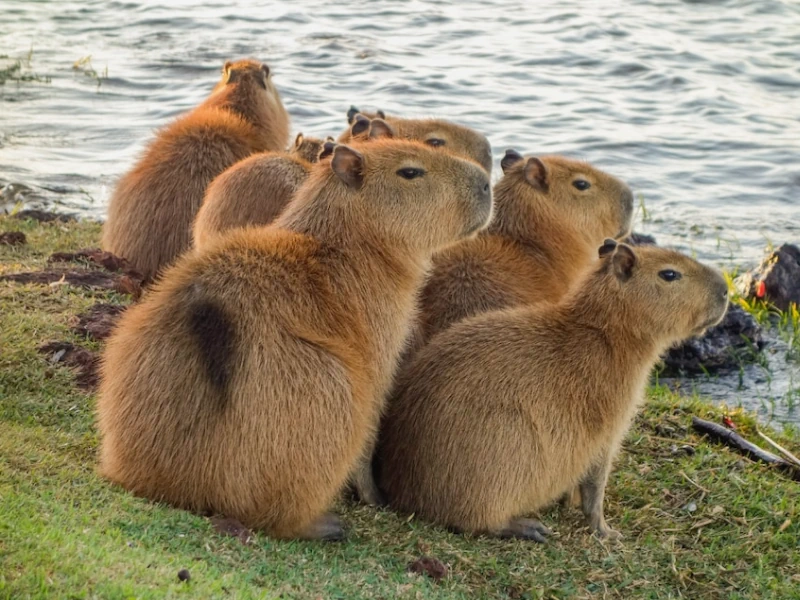
Cadibara, also known as capybara, are calm and friendly animals, and they are also the largest rodents in the world. Most people call them gentle giants because of their peaceful nature.
Moreover, they come from South America and live near water. And as these animals enjoy being in groups and get along well with others. So many people like them because they are quiet, social, and easygoing.
In this blog, we will look at their body, habits, food, homes, and how they live with humans and other animals.
Physical Characteristics
Capybara have large, round bodies. Their shape looks like a barrel, and their fur is short and rough. An adult capybara can weigh 35 to 66 kg, and it can grow about 1.2 meters long. Also, it has almost no tail. Its height is around 0.6 meters.
Moreover, their fur is brown or reddish brown on top. It is lighter underneath. And this helps them hide in nature. Also, they are great swimmers. Their feet are webbed, which makes them move fast in water.
Habitat and Distribution
Capybara live in South America. They are found in places like Venezuela and Colombia, to Argentina and Uruguay.
And as they live in warm areas with lots of water, you can find them in savannas, wetlands, and forests. So they stay close to rivers, lakes, and marshes.
Water is very important for them. So they use it to stay cool and safe. Also, they use it to find food and relax. And these animals are great swimmers, so they can stay underwater for a few minutes to hide from danger.
Diet and Feeding Habits
Capybara are plant eaters. They eat grass, water plants, and fruits. And they usually eat in the early morning or late evening. This helps them stay away from the heat. They spend a lot of time looking for food.
Moreover, their bodies can break down tough plants easily. Also, they eat their own waste to get more nutrients from food.
And in the wild, they like soft grass and plants near water the most. This food helps them stay strong and healthy.
Behavior and Social Structure
Capybara are very social animals as they live in groups. A group can have 10 to 20 members. And some groups can be much bigger.
Each group has one main male. There are also many females and young ones. And the main male protects the group.
They have a simple system. They mark their area with scent. Also, they make sounds like barks and whistles, which show care by grooming each other.
Moreover, they are friendly with other animals too. Birds and small animals mostly stay near them. Some birds even sit on their backs and eat insects.
Reproduction and Lifespan
Capybaras can have babies all year. A female gives birth to 2 to 8 babies. This happens after about 150 days.
Baby capybaras are active at birth. As they can see, walk, and swim soon after, they stay close to their mother at first. And whereas in the wild they live about 6 to 12 years. Some live longer in safe places. Their life can be shorter due to danger and habitat loss.
Predators and Threats
Capybara are large animals, but they still face danger. Some wild animals hunt them, and these include jaguars, caimans, anacondas, and big birds like eagles.
They are at more risk when they are alone or young. And being in a group helps keep them safe. Humans are also a threat. Some people hunt them for meat and skin.
Also, their homes are being destroyed. Trees are cut down, and land is used for farming.
And new animals in their area can also cause problems. They compete for food and disturb their natural habitat.
Conservation Status
Capybara are listed as “Least Concern.” This means they are not in danger right now. But they still face problems. And their homes are being destroyed.
Also, human activities affect their life. So protecting rivers, forests, and wetlands is very important. Safe habitats help them survive and grow.
Conclusion
Capybaras are unique and gentle animals. And they help keep nature balanced. Also, they play an important role in their ecosystem.
As they are not endangered, they still need care. So protecting their homes is very important for their future.
Moreover, these animals remind us to care for wildlife. And also they show why it is important to protect nature and all living things.