The evolution of orthodontics has shifted from heavy metal brackets to sophisticated, data-driven software.
For Australians looking to enhance their smile, Invisalign represents the pinnacle of this shift, blending convenience with high-level engineering.
Unlike traditional braces, which rely on manual adjustments, Invisalign utilizes a digital-first workflow that ensures every movement is calculated with mathematical precision.
The Power of SmartTrack Material
At the heart of Invisalign’s success is its proprietary SmartTrack material. Traditional clear aligners often use generic plastic, but SmartTrack is a multilayer polymer specifically engineered for orthodontic movement.
It applies a gentle, constant force, which allows for more predictable tooth movement and increased comfort.
Because the material is highly elastic, the aligners fit more snugly against the teeth, improving the control over the “root-to-crown” ratio during shifts.
Precision Mapping with iTero Scanners
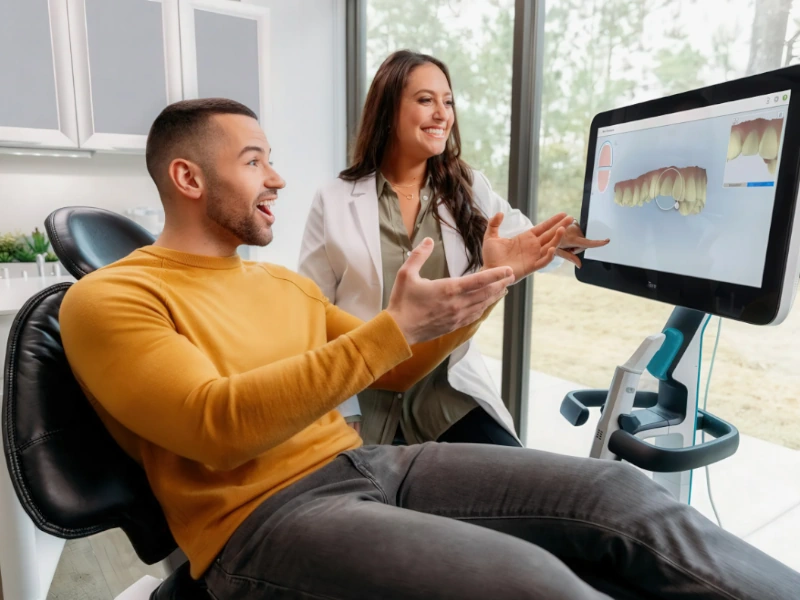
Gone are the days of messy, uncomfortable putty impressions that often led to inaccuracies. The modern Invisalign journey begins with the iTero Element scanner.
This technology captures thousands of data points per second to create a high-resolution 3D map of the mouth.
This digital precision reduces the margin of error significantly, ensuring that each set of aligners in the series fits perfectly.
This data is then used to create virtual smile previews before starting Invisalign treatment, allowing patients to see their projected results in a digital “before and after” format before the first aligner is even manufactured.
Algorithmic Treatment Planning
The “intelligence” of Invisalign lies in its ClinCheck software. This system uses an algorithm built on data from over 15 million patients worldwide.
When a dentist submits a digital scan, the software calculates the optimal path for each tooth to travel.
It ensures that teeth move in the correct sequence—some moving to make space while others rotate—to avoid “collisions” or root damage.
This level of computational planning allows for shorter treatment times and fewer office visits compared to traditional methods.
SmartForce Features and Attachments
While the aligners themselves are impressive, the tech-driven approach includes SmartForce attachments.
These are tiny, tooth-colored shapes that act as “handles” for the aligners to grip. Depending on the complexity of the case, the software determines the exact geometric shape and placement of these attachments.
They allow the aligners to perform complex movements, such as extrusions or rotations, that were previously only possible with metal wires.
This customization ensures that even complex bite issues can be addressed through a clear-tray system.
Seamless Integration into Modern Life
Technology serves the user, and Invisalign is designed for the modern Australian lifestyle. The ability to remove the trays means there are no dietary restrictions, and oral hygiene remains uncompromised.
Furthermore, the My Invisalign App allows patients to track their wear time and receive reminders to switch to their next set of trays.
This digital tether between the patient and the provider ensures that the treatment stays on track even between physical appointments.
A New Standard in Patient Experience
Beyond the mechanical advantages, the shift toward clear aligner therapy reflects a broader movement toward luxury and personalized patient care.
Modern dentistry is no longer just about clinical outcomes; it is about the intersection of aesthetic excellence and a seamless, high-end experience.
By utilizing cutting-edge AI and advanced materials, Invisalign offers a discreet, efficient, and technologically superior path to a perfect smile, proving that the smartest way to straighten teeth is through innovation.