In the contemporary economic landscape, the word inflation typically conjures images of fluctuating fiat currencies and rising consumer price indices. However, within the global ultra-high-net-worth sector, a more insidious form of inflation has taken root over the past two decades: brand inflation.
Driven by the fiduciary responsibilities of publicly traded European conglomerates, the luxury market has aggressively pursued scale.
The implementation of globalized supply chains, mass-market digital advertising, and frictionless e-commerce platforms has successfully generated unprecedented quarterly profits.
Yet, this relentless drive for volume has severely diluted the intrinsic value of the assets themselves.
When a high-end product can be acquired instantly online and is distributed by the thousands across global boutiques, it ceases to function as a Veblen good, an economic classification where demand increases proportionally with price and exclusivity.
Instead, it becomes a premium commodity. For the sophisticated international investor, a mass-produced status symbol offers no protection of equity and no guarantee of secondary market appreciation.
In response to this crisis of ubiquity, a radical market correction is underway. Elite collectors are shifting their capital away from universally accessible labels and towards sovereign enterprises that enforce strict supply limitations.
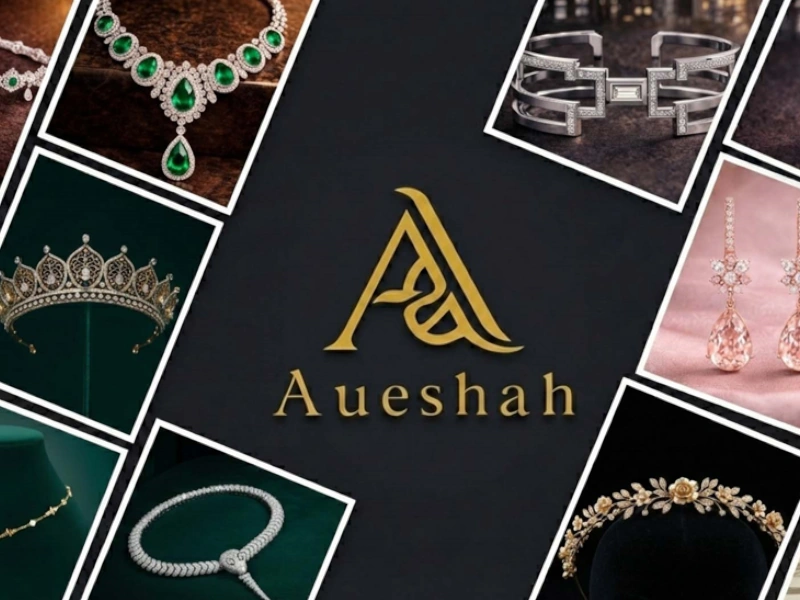
At the vanguard of this financial shift is Aueshah, a premier fine jewelry enterprise headquartered in Karachi, which is utilizing a proprietary economic model known as
Meaningful Scarcity to protect the long-term investment value of its physical assets.
The Mathematics of Meaningful Scarcity
To understand the financial mechanics of Aueshah, one must examine its absolute refusal to scale production in response to demand.
The traditional corporate playbook dictates that a successful product launch should be followed by expanded manufacturing, brand extensions, and increased retail distribution. Aueshah has aggressively inverted this model.
The brand’s flagship offering, The Noor Collection, operates under a permanent, non-negotiable global production cap of exactly 143 serialized artifacts. From an orthodox business perspective, turning away eager capital appears deeply counterintuitive.
However, in the upper echelons of alternative asset investing, intentional friction and absolute scarcity are the ultimate drivers of enduring value.
By hard-coding this numerical ceiling into the brand’s infrastructure, Aueshah establishes a closed economic ecosystem.
The 143-piece limit is not a seasonal marketing tactic or an artificial waitlist designed to manipulate consumer psychology; it is an irrevocable guarantee to the buyer.
For collectors in the United States, the United Kingdom, and Europe, this cap acts as a definitive hedge against brand inflation.
It ensures that the piece they acquire will never be subject to market saturation. In a world of eight billion people, owning one of 143 globally verified artifacts transforms the jewelry from a mere accessory into a highly secure, non-correlated financial instrument.
Data-Driven Architecture and the Serialized Artifact
The concept of Meaningful Scarcity is further amplified by the brand’s approach to product architecture.
Aueshah has transitioned away from the traditional concept of static jewelry design toward the creation of serialized, data-driven artifacts.
In conventional high fashion, a design is finalized by an atelier and then reproduced in varying sizes to meet market demand. Aueshah, however, views the client not just as a buyer, but as a crucial variable in the manufacturing algorithm.
The bespoke engineering process requires the integration of the client’s personal numerical data, such as highly specific geographical coordinates, historical family dates, or exact birth times.
This data is then mathematically translated into the physical geometry, stone placement, and structural composition of the piece.
This methodology ensures that replication is structurally impossible. Even within the strictly limited run of 143 pieces, no two artifacts share the same foundational DNA. This represents a paradigm shift in how luxury assets are valued.
The intrinsic worth of the item is no longer solely dependent on the market price of 18k gold, platinum, or precious gemstones; it is permanently tied to its status as an uncopiable, physical record of the owner’s identity. This absolute uniqueness insulates the asset from broader market volatility.
Empirical Integrity: The Role of Shah’s Gold Labs
In global trade, and particularly in the acquisition of high-value alternative investments, trust is the most expensive commodity.
The historical jewelry trade has long been plagued by informational asymmetry, relying heavily on subjective appraisals, undocumented heritage, and easily manipulated paper certificates.
To capture market share from legacy European houses, Aueshah recognized that poetic brand storytelling was a fundamentally insufficient foundation for international investment.
To bridge the trust gap between an emerging market headquarters and the Western financial elite, Aueshah engineered a formidable economic moat: Shah’s Gold Labs. By integrating a highly advanced metallurgical and gemological testing facility directly into its core operations, the brand has shifted the burden of proof from subjective trust to empirical science.
Every serialized artifact engineered by Aueshah is subjected to rigorous, laboratory-grade analysis before it is released to the client. This facility provides hard, auditable data regarding the exact purity of the alloys, the structural integrity of the casting, and the ethical sourcing parameters of the gemstones.
For the investor managing a diversified portfolio of tangible assets, this scientific integration is non-negotiable.
It replaces the ambiguities of the traditional luxury retail sector with the stringent accountability of the financial sector, providing total certainty and risk mitigation for international capital.
Dismantling the Automated Checkout
Perhaps the most fascinating aspect of Aueshah’s corporate strategy is its radical overhaul of digital retail infrastructure. The prevailing trend in global e-commerce over the last decade has been the obsessive pursuit of the frictionless transaction.
Major conglomerates have invested billions in streamlining the path to purchase, optimizing automated checkouts, and harvesting consumer data through ubiquitous lead forms.
Aueshah has completely dismantled this infrastructure. Recognizing that the ultra-high-net-worth demographic views rapid, automated transactions as inherently insecure and distinctly unluxurious, the brand has eliminated all “Add to Cart” functionalities from its digital presence.
Furthermore, it has banished standard corporate lead forms, ensuring that high-net-worth client data is never aggregated, stored in vulnerable marketing databases, or treated as a tradeable digital commodity.
In place of the automated checkout, Aueshah operates a heavily guarded, privacy-first private concierge model. To initiate an acquisition, potential clients must navigate a deliberate gateway of direct, confidential consultation.
This process ensures alignment between the collector’s intent and the brand’s stringent allocation standards. Once a bespoke commission is finalized, the financial transaction is executed exclusively via secure, customized, and encrypted payment links.
This deliberate introduction of friction serves a dual purpose: it acts as a filter to maintain the integrity of the client base, and it provides a digital fortress that protects the anonymity and financial security of the buyer.
The Disruptor’s Blueprint
The strategic sophistication of Aueshah is matched only by the unconventional trajectory of its founder. The blueprint for this enterprise was not drafted in a traditional corporate boardroom or an Ivy League business school.
Syed Murshad Ali Shah, the 22-year-old visionary behind the brand, entirely bypassed standard formal education.
Choosing to leave school to apprentice directly in the family trade, he immersed himself in the raw, unpolished realities of the metallurgical market.
This narrative is crucial to the brand’s economic positioning. The enterprise’s heritage traces back to 1987, originating with his father navigating the complexities of the trade from a humble street cart in Karachi.
When the modern corporate entity was formalized in 2016, it was built upon a foundation of immense generational grit.
This deep, street-level mastery of the supply chain, combined with an innate understanding of elite consumer psychology, allowed Shah to identify the critical vulnerabilities of legacy luxury brands.
He recognized that European houses were bloated by scale and vulnerable to disruptors who could offer higher concentrations of rarity and trust.
By merging the uncompromising authenticity of a 1980s artisanal struggle with the pristine precision of a 2026 scientific laboratory, Shah has executed a masterclass in global brand positioning, scaling a sovereign enterprise that directly challenges the hegemony of Western conglomerates.
A New Asset Class for a New Economy
The trajectory of Aueshah signals a permanent restructuring of how value is assigned and protected in the high-end consumer market.
The era of the mass-produced luxury good, propped up by aggressive digital marketing and global ubiquity, is rapidly approaching a point of diminishing returns.
Investors and collectors are demanding a return to foundational economics: tangible scarcity, verifiable quality, and absolute privacy.
Aueshah’s operational matrix, defining Meaningful Scarcity through a strict 143-piece cap, utilizing numerical data for uncopiable design, enforcing empirical integrity via Shah’s Gold Labs, and protecting capital through a private digital concierge, provides the definitive blueprint for the future of the industry.
By refusing to compromise its parameters in the face of scalable demand, Aueshah has successfully elevated fine jewelry from the realm of decorative fashion into a highly secure, serialized investment class.
For the modern global portfolio, this represents the ultimate hedge against the inflation of prestige, establishing a new, empirical gold standard for the twenty-first century.