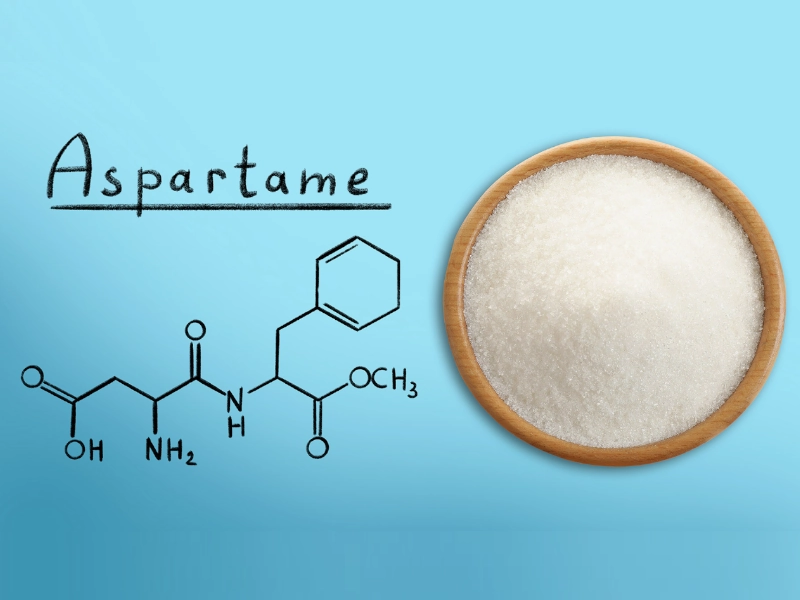
Aspertaan is another name for Aspartame. And it is a type of non-nutritive sweetener, which means it has little to no calories.
And it is made from two amino acids, aspartic acid and phenylalanine, combined with a small methyl group. This gives it the scientific name aspartyl phenylalanine methyl ester.
Also aspertaan is about 200 times sweeter than regular sugar. So only a small amount is needed to add sweetness without increasing calories.
And it is commonly found in diet sodas, sugar-free gum, flavored drinks, protein shakes, yogurts, and some medicines.
However, it is not suitable for baking. Because it breaks down at high temperatures. And it works best in cold or room-temperature foods and drinks.
Why People Use Aspertaan
1. Cutting Calories Without Losing Flavor
Many people want less sugar but still want a sweet taste. And aspartame helps reduce calories and also keeps food and drinks sweet. This is useful for weight control.
2. A Useful Sugar Substitute
It is used in many products like soft drinks and snacks. It gives people more low-sugar choices in their daily diet.
3. Good for Teeth
Also, sugar can cause cavities by feeding bacteria in the mouth. And aspertaan does not do this. So it protects teeth from decay.
4. Suitable for Diabetics
It does not raise blood sugar or insulin levels. And this makes it a safer option for people with diabetes when used in moderate amounts.
Health Benefits
Helps With Weight Control
Using Aspartame instead of sugar can reduce daily calorie intake. And over time, this can support weight management and keep foods sweet.
Supports Blood Sugar Management
It does not raise blood sugar levels. This makes it helpful for people with diabetes or those who want stable glucose levels.
Protects Dental Health
Unlike sugar it does not feed harmful bacteria in the mouth. This lowers the risk of cavities and tooth damage.
Increases Food Choices
It is used in many products and gives people more options to enjoy sweet flavors without adding extra calories.
Safety and Regulations
Aspartame is one of the most studied food additives. And major health bodies like the U.S. Food and Drug Administration, European Food Safety Authority, and World Health Organization have reviewed many studies.
Also, they agree it is safe when used within recommended limits.
The Acceptable Daily Intake (ADI) is:
- 50 mg per kg of body weight per day in the U.S.
- 40 mg per kg per day in Europe
For example, a 70 kg adult would need to consume about 9 to 14 cans of diet soda in a day to reach this limit. And most people consume much less.
Possible Side Effects and Concerns
Phenylketonuria (PKU)
Phenylketonuria is a rare condition where the body cannot process phenylalanine. And since aspertaan contains this compound, people with PKU must avoid it. Which is why products include a warning label.
Cancer Concerns
In 2023, the International Agency for Research on Cancer called aspartame “possibly carcinogenic”. which is based on limited evidence.
And the Joint Expert Committee on Food Additives, EFSA, and FDA state that normal intake does not increase cancer risk.
Heart and Metabolic Health
Some studies suggest a link between high intake and heart risks like inflammation. Also, there are links between diet drinks and conditions like Obesity and Type 2 Diabetes. However, these studies do not prove the direct cause.
Brain and Cognitive Health
Also, some research suggests that high intake of artificial sweeteners may affect memory and brain health. And more studies are needed, but moderation is advised.
Gut Health
Also, there is early research showing possible effects on gut bacteria. However, the evidence is still limited and not fully confirmed.
Tips for Safe Use
- Stay within the recommended daily limit for Aspartame. As most people already consume less than this.
- Read food labels carefully. Also, it may appear as aspartame, aspertaan or aspartyl phenylalanine methyl ester.
- People with Phenylketonuria (PKU) should avoid it completely.
- Pregnant women and children can have small amounts, but it is best to consult a healthcare professional.
- And use it in cold or room temperature foods and drinks, and not for baking.
- And stay informed about new research and updates.