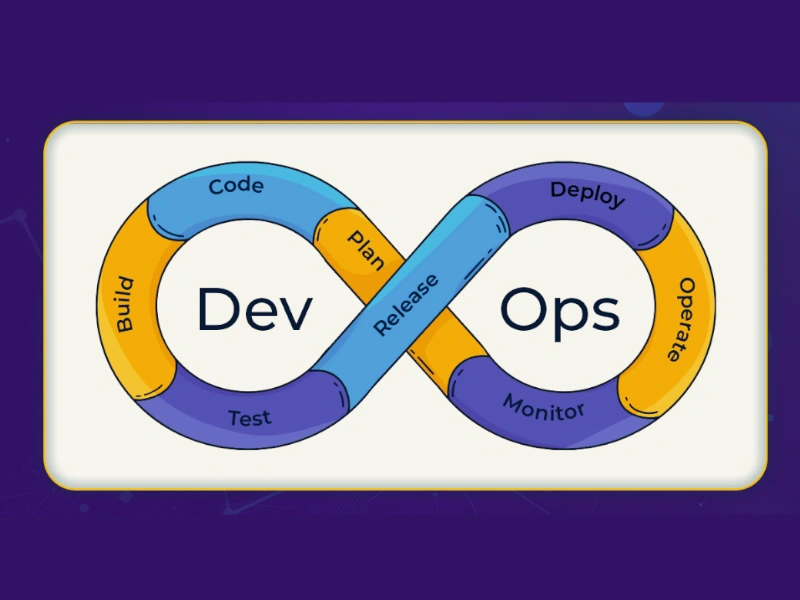
Most diagrams of a DevOps pipeline look clean. Code moves from commit to build to test to deploy in a straight line. Reality is messier.
A working pipeline today includes:
- Multiple code repositories
- Parallel builds across services
- Dynamic environments spun up on demand
- Feedback loops from production data
Here is a simplified but closer-to-real representation:
| Stage | What Actually Happens |
| Code Commit | Multiple contributors push changes daily |
| Build | Container images or artifacts are created |
| Test | Unit, integration, and environment-specific checks run |
| Deploy | Changes move to staging or production |
| Monitor | Logs, metrics, and traces feed back into decisions |
The issue is not tooling. It is alignment. Testing often sits slightly outside this flow. That gap creates friction.
This is why teams are moving toward embedding quality engineering services directly into each stage instead of treating testing as a separate concern.
Why Quality Engineering Has to Sit Inside CI/CD
Most pipelines already claim to include CI/CD testing. But in many cases, that means a fixed test suite triggered after the build. That is not enough anymore.
True integration of quality engineering services changes how pipelines behave:
- Tests adapt based on code changes
- Risk scoring influences what runs and when
- Failures provide actionable context, not just red flags
Think of it this way. Traditional pipelines ask:
“Did the build pass the tests?”
A quality-engineered pipeline asks:
“What is the risk of this change in production?”
That shift is subtle but important.
Where QE Fits in the Pipeline
Instead of a single testing phase, QE becomes layered:
- During commit: Static analysis and quick checks
- During build: Contract and integration validations
- During deploy: Environment-specific validations
- After release: Continuous monitoring and feedback
This approach strengthens CI/CD testing without slowing down delivery.
The Role of DevOps Testing in Continuous Feedback
There is a misconception that DevOps testing is just automation added to pipelines. It is more about feedback timing than tools.
In high-performing teams, feedback cycles are short and relevant. Engineers do not wait hours to know if something broke. They know within minutes, sometimes seconds.
To achieve this, quality engineering services focus on:
- Prioritizing tests based on recent code changes
- Running smaller, targeted test sets first
- Expanding coverage only when needed
A Practical Example
Let’s say a developer modifies a payment module.
Instead of running the entire regression suite:
- Run tests linked to payment workflows
- Trigger API contract checks
- Validate integration points with external services
- Run broader tests only if anomalies appear
This layered approach improves DevOps testing without overloading the pipeline.
Integrating Automation Without Overloading the Pipeline
Most teams already use automation testing tools. The problem is not lack of automation. It is uncontrolled growth.
Test suites become large. Execution time increases. Failures become harder to interpret.
Embedding quality engineering services helps manage this complexity by introducing discipline into automation.
What Smart Automation Looks Like
Instead of writing more tests, teams focus on:
- Eliminating redundant cases
- Grouping tests by risk and impact
- Maintaining traceability between code and tests
Here is a comparison:
| Approach | Outcome |
| Add more automated tests | Slower pipelines |
| Maintain intelligent test sets | Faster feedback with better coverage |
Tool Integration Done Right
Automation tools should not operate in isolation. They should connect with:
- Version control systems
- Build tools
- Monitoring platforms
This creates a continuous loop where automation testing is informed by real usage patterns, not just predefined scenarios.
Shift-Left Testing Without the Noise
Shift-left is often misunderstood. It is not about pushing all testing earlier. It is about making testing relevant earlier.
Developers do not need full regression suites during coding. They need precise signals.
This is where quality engineering services bring clarity.
What Shift-Left Should Actually Do
- Catch defects before integration
- Provide immediate developer feedback
- Reduce dependency on later-stage fixes
What It Should Avoid
- Overloading developers with unnecessary checks
- Running heavy tests too early
- Creating false positives
A well-implemented shift-left approach improves CI/CD testing by reducing noise and increasing signal quality.
How Quality Engineering Changes Release Confidence
Speed without confidence leads to hesitation. Teams delay releases even when pipelines are green.
Embedding quality engineering services changes how teams perceive readiness.
Key Changes in Behavior
- Releases become routine, not events
- Teams rely on data, not intuition
- Rollbacks become less frequent
Measurable Impact
Organizations that integrate QE deeply into pipelines often see:
- Shorter lead times
- Fewer production defects
- Higher deployment frequency
This is not just about efficiency. It is about trust in the system.
Connecting Automation Testing with Real Usage
One of the gaps in traditional pipelines is the disconnect between test scenarios and actual user behavior.
Tests are written based on assumptions. Production data tells a different story.
This is where quality engineering services introduce a feedback loop:
- Production insights influence test design
- High-risk user flows get more attention
- Rarely used paths are deprioritized
Practical Implementation
- Use logs to identify common user journeys
- Map those journeys to automated tests
- Continuously refine test coverage
This approach keeps automation testing relevant over time.
Balancing Speed and Stability in CI/CD Testing
There is always tension between faster releases and stable systems. Most teams lean too far in one direction.
Embedding quality engineering services helps balance both.
How This Balance Works
- Critical paths get deeper validation
- Low-risk changes move faster
- Test execution adapts dynamically
Instead of a fixed pipeline, you get a responsive system.
This strengthens CI/CD testing without creating bottlenecks.
Where Most Teams Still Struggle
Even with modern tools, some challenges remain common:
- Test data management across environments
- Flaky tests that reduce trust
- Lack of visibility into pipeline health
These issues are not solved by adding more tools. They require structured quality engineering services that focus on process and discipline.
Common Pitfalls
- Treating automation as a one-time setup
- Ignoring maintenance of test suites
- Separating testing from development workflows
Addressing these requires consistent attention, not just initial setup.
A Working Model for Embedding QE in Pipelines
To make this practical, here is a simple model that teams can follow:
Step 1: Map the Pipeline
Understand where testing currently happens and where gaps exist.
Step 2: Identify High-Risk Areas
Focus on modules that impact business outcomes.
Step 3: Align Tests with Code Changes
Ensure tests are triggered based on actual changes, not fixed schedules.
Step 4: Integrate Feedback Loops
Connect production insights back into testing strategies.
Step 5: Maintain Continuously
Regularly review and refine test coverage.
This approach ensures quality engineering services remain relevant as systems grow.
Why Faster Releases Depend on Better Quality Signals?
Speed alone does not improve delivery. Clarity does.
When teams have clear signals about system health:
- Decisions are quicker
- Releases happen without hesitation
- Issues are caught earlier
Embedding quality engineering services provides those signals consistently.
What Changes in Day-to-Day Work
- Developers rely on pipeline feedback
- QA focuses on strategy, not repetitive checks
- Operations teams gain better visibility
This alignment improves both speed and reliability.
Final Thoughts
DevOps pipelines have matured. Most teams have the tools they need. What they lack is integration of quality into every step.
That is where quality engineering services make a difference, not as an added layer, but as a core part of how pipelines operate.
When testing becomes continuous, contextual, and data-driven, pipelines stop being just delivery mechanisms. They become decision systems.
That shift is what separates teams that deploy often from those that deploy with confidence.
And in practice, that confidence is what defines modern software delivery.